
Primitive at M3AAWG Paris

Why Primitive joined M3AAWG
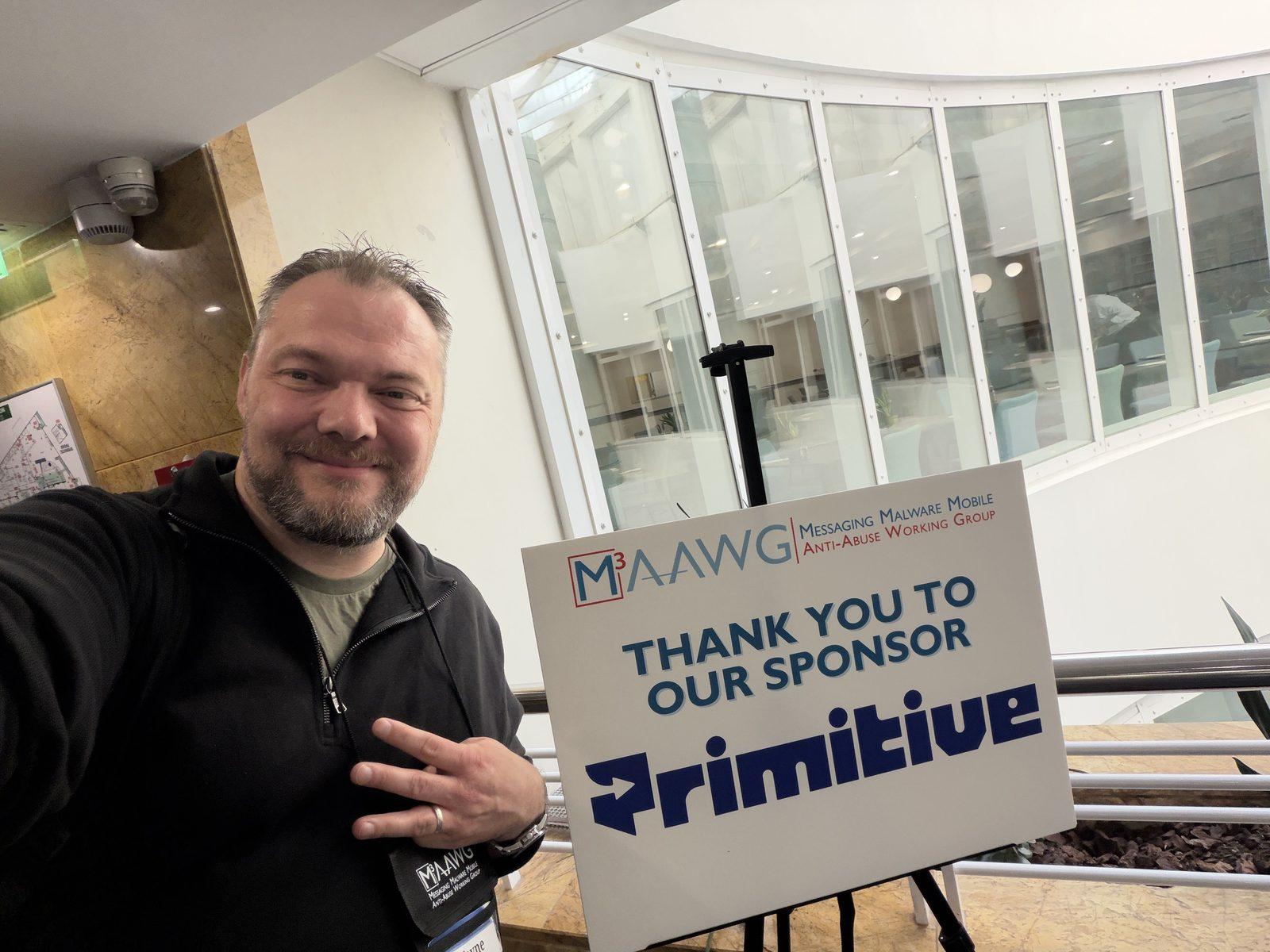
The Primitive team went to Paris for the M3AAWG 68th General Meeting! If you build on email, this is the room where a lot of the rules quietly get written.
At Primitive we give AI agents their own email addresses so they can send, receive & talk to each other the same way people do. That means we care a lot about the stuff M3AAWG cares about: deliverability, authentication, abuse & trust. So we came to listen, learn & meet the people who keep email working.
What M3AAWG is (and why builders should care)
M3AAWG is the Messaging, Malware & Mobile Anti-Abuse Working Group. It brings together mailbox providers, email senders, security teams & infrastructure companies to fight spam, phishing & abuse together.
Most developers never think about it, but its work shapes whether your email lands in the inbox. Best practices on authentication like SPF, DKIM & DMARC, sender reputation & abuse handling come out of rooms like this one.
For anyone putting AI agents on email, that matters even more. Agents send at machine speed, & the inbox providers in this room are the ones deciding how to treat that traffic.
What's on our minds after Paris
A week surrounded by people who keep email safe left us thinking about a few big themes.
Your DNS is part of your email security
Old DNS records don't just sit there. A forgotten record pointing at a service you cancelled, or a typo in an SPF include, can let someone else send mail that passes authentication as you. As domains & vendors pile up, it's easy to let this slide.
This one hits close to home for us. Every agent on Primitive gets a real address on a real domain, so the records behind it are part of the product.
Authentication is table stakes, & still not universal
SPF, DKIM & DMARC have been around for years, but plenty of domains still don't enforce them. That gap is exactly what phishing lives in. Agents that send email should meet the strictest version of these standards, not the loosest.
Delivery is a team sport
Infrastructure & deliverability aren't separate problems. Queues, throttling & sender reputation all feed into each other, & you can't fix what you can't see. Good observability & clear ownership matter as much as the code.
Agents need clear rules too
AI is showing up on both sides of abuse: attackers use it to scale, & defenders use it to keep up. Our take: any agent with an inbox should come with clear answers to what it's allowed to send, when a human steps in, & what gets logged so you can see what it did.
What it means for agents on email
Email works because thousands of independent operators agreed on how to trust each other. Agents don't get a shortcut around that, & they shouldn't.
That's why we built Primitive on the same foundations everyone here relies on: SPF, DKIM & DMARC on every domain, real reputation, real accountability for what gets sent. An agent with an email address should be a good citizen of the network, not a new kind of spam.
Agents are getting email addresses. Millions of personal agents per day (Muse, Instinct, Dots, GrokBot, Nym, etc) are working on behalf of humans that delegate work to them. We had better be ready for a world where agents are behind emails, and at Primitive, we are committed to ensuring these agents communicate in a safe, secure, and trackable environment.
What's next
We're leaving Paris with dozens of new connections & learnings from industry leaders in anti-abuse. We've also joined the AI + Sender working groups and are brainstorming future talks at the next M3AAWG as Primitive is at the forefront of agent communication. We're excited to teach, learn, and grow together in this new agentic world.
Thanks to everyone who took the time to talk with us & share ideas. If you were here, or want to learn more & keep the conversation going, reach out at ashley@corp.primitive.dev or find us on X at @primitive.
See you at the next one in Vancouver!


1 / 4